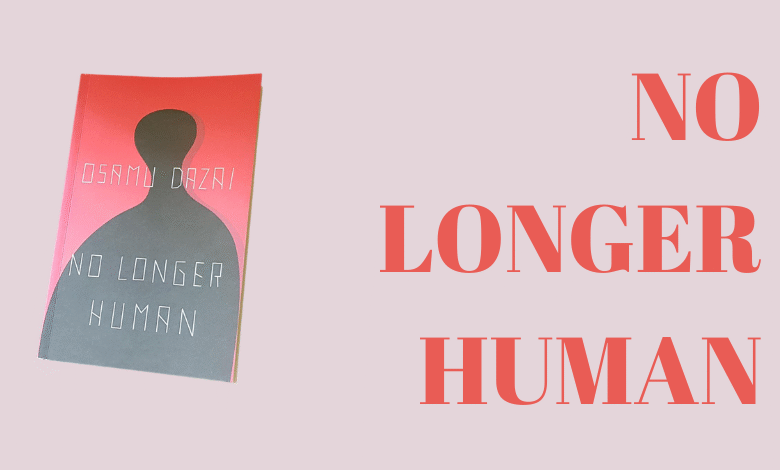
Have you ever been in a room full of people, maybe at a party or a family gathering, and felt a sudden, chilling distance between you and everyone else? The laughter sounds muffled, the smiles seem like paintings on a wall, and you feel like an observer from behind a thick glass panel. You are there, but you are not. You might smile and nod, but inside, you feel a hollow emptiness. In that moment, you might whisper to yourself, “I feel like I’m no longer human.”
This is a more common experience than you might think. The phrase “no longer human” carries a heavy weight. For many, it brings to mind the famous Japanese novel by Osamu Dazai. But for countless others, it is a raw, personal description of their inner world. In this article, we will explore the many layers of this phrase. We will look at the famous book that gave it a name, but we will also dive deep into what it means to feel this way in your own life. My aim is to help you understand this feeling, to show you that you are not broken, and to offer a path toward reconnection.
The Shadow of a Masterpiece: Dazai’s “No Longer Human”
To fully grasp the depth of this phrase, we must start with its most famous origin. Published in 1948, No Longer Human is the final and most celebrated work of Osamu Dazai, a writer whose life was as tragic as his stories. He completed the novel just before taking his own life, which adds a haunting layer to its content.
The book is a series of three notebooks written by its protagonist, Oba Yozo. From the outside, Yozo is a charming and funny clown, always making people laugh with his antics. But this is just a mask. Inside, he is terrified of other people. He cannot understand their emotions, their motivations, or their social rules. He describes himself as having been “born with a nature that could not say no.” To survive, he creates a performance of a happy, comical human being, while inside he feels completely disconnected from the human race.
What makes Dazai’s novel so powerful is its semi-autobiographical nature. Dazai himself struggled with depression, addiction, and multiple suicide attempts throughout his life. When you read Yozo’s account, you are, in many ways, reading Dazai’s own confession. The book is a masterpiece of the “I-Novel” (Shishosetsu) genre in Japanese literature, where the line between the author’s life and the fiction is deliberately blurred. It is not an easy read. It is bleak, uncomfortable, and at times, deeply disturbing. But its honesty about human suffering is what has made it a classic, resonating with readers across the world for decades.
Read Also: The Mystery of “Jack Kallis Baltimore” – Unraveling the Legend’s American Connection
What Does “No Longer Human” Feel Like in Real Life?
You do not need to have read Dazai’s book to understand the feeling it describes. In fact, you have probably experienced a version of it yourself, perhaps during a period of intense stress, grief, or exhaustion.
So, what does it actually feel like?
Imagine waking up and going through your daily routine—brushing your teeth, drinking coffee, commuting to work—but it all feels like you are watching a movie of your own life. Your hands don’t feel like your own. The taste of coffee is just a concept, not a sensation. The world appears visually flat, or as if you’re looking at it through a foggy lens. This specific experience is often called depersonalization.
Now, combine that with a feeling of being separated from everyone around you. You listen to your friends talk, but their words don’t seem to reach the real you. You feel like an alien who has been dropped on Earth and is desperately trying to mimic human behavior to fit in, but never quite succeeding. This is alienation or derealization.
The core of the “no longer human” feeling is a profound loss of connection. It is a disconnect from your own emotions (numbness), from your own body (depersonalization), and from other people and the world around you (alienation). It is the terrifying sense that the essence of what makes you you has gone missing, leaving behind a hollow shell that simply goes through the motions.
Why Do We Feel This Way? The Roots of Disconnection
This feeling does not come out of nowhere. It is often a coping mechanism, your mind’s way of protecting itself from something it cannot handle. Think of it like a circuit breaker in your house. When there is a power surge, the breaker trips to prevent a fire. Similarly, when your emotional system is overloaded, your mind can “trip” and shut down feelings to protect you from psychological harm.
Here are some common causes that can trigger this state:
-
Overwhelming Stress and Burnout: When you are constantly pushing yourself, meeting deadlines, and dealing with pressure without rest, your nervous system can simply exhaust itself. The result is often emotional numbness. You stop feeling because you are too tired to feel.
-
Trauma: This is a major cause. After a traumatic event, whether it’s a single incident or prolonged emotional abuse, the mind can detach from the experience as a way to survive the unbearable pain. This detachment can become a habitual way of being.
-
Mental Health Conditions: The feeling of being “no longer human” is a core symptom of several conditions. It is central to Depersonalization-Derealization Disorder (DPDR). It is also very common in major depression (where emotions flatline) and anxiety disorders (where the constant fear can make the world feel unreal).
-
A Lack of Authentic Connection: We live in a world that is more connected digitally than ever before, yet many people report feeling profoundly lonely. Spending more time in curated online spaces than in genuine, face-to-face interactions can foster a sense of alienation. If you feel you must wear a “mask” on social media or even at work or home, you can start to lose touch with who you are without it.
I remember a period in my own life, after a series of personal losses and professional failures, where I felt this way for months. I would drive to work, do my job, and come home, but it was all on autopilot. I could see my own sadness, but I couldn’t feel it. It was like my emotions were happening to someone else in another room. I was functionally “fine,” but I was utterly disconnected from myself and everyone I loved. It was a terrifying and lonely place to be.
The Mask We Wear: Hiding Our True Selves
Dazai’s Oba Yozo used the mask of a clown. What is your mask?
For many of us, it is the “I’m fine” mask. It is the persona of the capable employee, the always-happy friend, or the strong one in the family who never shows weakness. We wear these masks to be accepted, to avoid judgment, and to protect ourselves from being hurt.
The problem is, when you wear a mask for too long, it can start to fuse to your skin. You forget what your real face looks like. You become so good at performing the role of “a human” that you lose connection with the messy, imperfect, but authentic person underneath. The feeling of being “no longer human” is often the feeling of the gap between the mask and your true self becoming a chasm. You are performing, but no one is home.
Finding the Path Back to Yourself
If you are feeling this way, please know this: it is a state you are in, not who you are. It is a signal from your deepest self that something is wrong and needs attention. You are not broken beyond repair. You are a human who has learned to disconnect in order to survive, and now it is time to learn how to reconnect.
Here are some gentle, practical steps that can help. This is not a quick fix, but a journey of rediscovery.
-
Name It and Validate It: The very first step is to acknowledge the feeling without judgment. Say to yourself, “I am feeling disconnected and numb right now.” Just naming it can reduce its power. Validate your experience. You are not crazy; you are having a human response to difficulty.
-
Reconnect with Your Body Gently: Since depersonalization often involves feeling disconnected from your body, the goal is to gently bring your awareness back to it. Do not force it. Try simple things. Hold a piece of ice and focus on the cold sensation. Take a slow shower and feel the water on your skin. Stretch your arms and legs and pay attention to the feeling of your muscles. The goal is sensation, not intensity.
-
Seek Small, Authentic Moments: You do not need to have a deep, philosophical conversation to reconnect. Start small. Pet a dog and really feel its fur. Call a trusted friend and be honest by saying, “I’ve been feeling a bit out of it lately.” The act of being vulnerable, even a little, can shatter the glass wall of alienation.
-
Limit the Noise, Create Space: Constant stimulation from phones, news, and social media can feed this feeling. Try to create pockets of quiet in your day. Just five minutes of sitting quietly, without any input, can allow your own thoughts and feelings to slowly bubble back to the surface.
-
Consider Professional Help: This is the most important step if the feeling is persistent and debilitating. A therapist or counselor is trained to help you understand the root causes of your disconnection. They can provide you with tools, such as trauma-informed therapy or techniques for managing DPDR, to safely process what you are going through. Asking for this kind of help is a profound act of self-care and courage.
Conclusion: The Humanity in the Struggle
The feeling of being “no longer human” is, ironically, one of the most human experiences of all. It is a testament to our sensitivity, our depth, and our need for authentic connection and meaning. Osamu Dazai’s tragic novel gives a voice to this profound despair, but we do not have to end our story where he ended his.
Your feeling of numbness is not a final verdict. It is a frozen river, and beneath the ice, the water of your emotions, your connections, and your true self is still flowing. The path back is not about a dramatic breakthrough, but about small, consistent acts of kindness toward yourself. It is about gently melting the ice, moment by moment, sensation by sensation, and honest conversation by honest conversation. The goal is not to become a perfect, happy human, but to become a real one again—flaws, feelings, and all. And in that authenticity, you will find that you were always, and will always be, profoundly and beautifully human.
Frequently Asked Questions (FAQ)
Q1: Is “No Longer Human” based on a true story?
A: While it is a novel, it is heavily autobiographical. Osamu Dazai drew from his own life of depression, addiction, and social alienation to create the protagonist, Oba Yozo. It is considered a prime example of the Japanese “I-Novel” genre.
Q2: What is the difference between feeling alienated and just being lonely?
A: Loneliness is the feeling of wanting connection. Alienation is a deeper, more philosophical feeling of being separated from others, from society, and even from yourself. You can feel alienated even when you are surrounded by people who love you, because it’s about an internal disconnect, not a physical lack of company.
Q3: Is this feeling a sign of a serious mental illness?
A: It can be a symptom of several conditions, including Depersonalization-Derealization Disorder, depression, and anxiety disorders. However, many people experience temporary periods of disconnection due to stress or burnout. If the feeling is persistent, distressing, and interferes with your daily life, it is a very good idea to speak with a mental health professional.
Q4: I’ve read the book and it made me feel worse. Is that normal?
A: Absolutely. No Longer Human is an intensely bleak and pessimistic book. It does not offer hope or solutions; it simply documents a descent into despair. If it affected you strongly, it might be because you see some of your own struggles reflected in it. It’s important to balance it with resources that focus on recovery and hope, unlike the novel itself.
Q5: How can I help a friend who seems to feel this way?
A: The best thing you can do is offer non-judgmental presence. Don’t try to “fix” them or tell them to “cheer up.” Instead, let them know you are there. You can say something like, “You seem like you’re going through a tough time, and I’m here to listen if you want to talk.” Validate their feelings and gently encourage them to seek professional support, offering to help them find resources if they want.